Soil Moisture Tension Probe

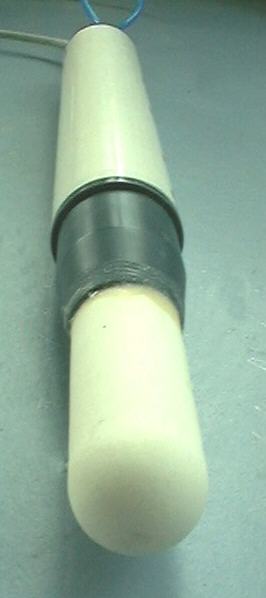
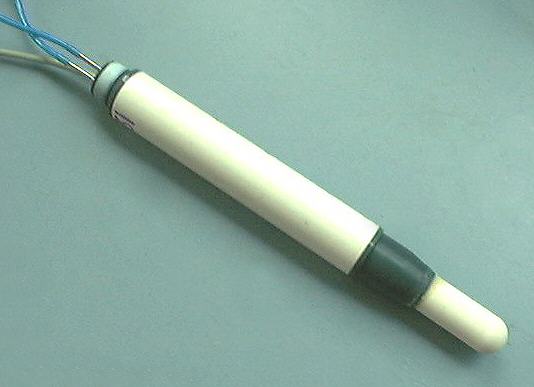
IntroductionThe Weather-Pro Soil Moisture Tension Probe has been developed for the measurement and logging of the force with which moisture is held by the soil matrix. This force is often referred to as soil potential, soil tension and sometimes as soil suction. The measurement is indicative of the energy that a plant root system must expend to obtain moisture from the soil matrix. This probe also has an internal temperature sensor which can be used to log the soil temperature. The probe has been designed for connection to the Weather-Pro and Weather-Pro Plus Weather Stations. The Weather-Pro Soil Moisture Tension Probe is available in two ratings, one designed for working with lower tensions and the other for high tension applications. |
 |
||||||||||||||||||||||||||||||||||||||||
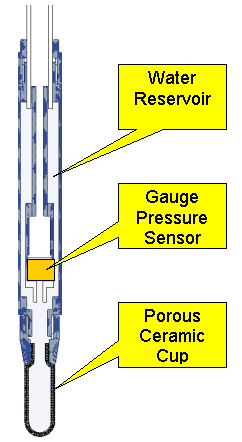
Theory of OperationThe soil tension probe has a porous
ceramic cup, filled with water, which is positioned in the soil so as to allow water to
enter and leave the probe body. This transfer of water across the porous ceramic cup
generates a pressure which is measured by a gauge pressure sensor in the probe. The gauge
pressure sensor is vented to the atmosphere by a breather tube in the probe electronics
cable. A weather station at the surface records the soil moisture tension and temperature.
|
|
||||||||||||||||||||||||||||||||||||||||
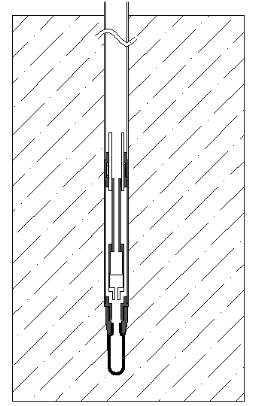
Use of the Probe in PracticeBefore use, the water reservoir of the soil moisture tension probe must be filled. Two filler tubes are provide for this task. Water is injected into one of these tubes until it flows out the other. The tubes are then sealed. An auger is used to drill a hole in the soil that has the same diameter as the tension probe. Soil taken from the bottom of the hole is mixed with water, to make a slurry which is poured back into the hole. The probe is then inserted into the hole. The slurry ensures good hydraulic contact between the ceramic cup and the soil. The probe is then then connected to the weather station.
|
 |
||||||||||||||||||||||||||||||||||||||||
Specification
|
|
||||||||||||||||||||||||||||||||||||||||
Choosing the best pressure range for the jobThe Low
Water Tension Probe is used in conditions where the change in
water tension will be less than -300cm. If a change of -300cm to -600cm of water tension
is expected, the High Water Tension Probe will be required. |
|||||||||||||||||||||||||||||||||||||||||
Part Numbers |
Quote when ordering |
||||||||||||||||||||||||||||||||||||||||
| Low Water Tension Probe (with Cup) | SMTP5WITHCUP | ||||||||||||||||||||||||||||||||||||||||
| High Water Tension Probe (with Cup) | SMTP15WITHCUP | ||||||||||||||||||||||||||||||||||||||||
| Low Water Tension Probe (without Cup) | SMTP5NOCUP | ||||||||||||||||||||||||||||||||||||||||
| High Water Tension Probe (without Cup) | SMTP15NOCUP | ||||||||||||||||||||||||||||||||||||||||
| Ceramic Cup | SMTPCUP | ||||||||||||||||||||||||||||||||||||||||
| Auger (33mm diameter with 1m shaft) | SMTPDRILL1 | ||||||||||||||||||||||||||||||||||||||||
| Auger (33mm diameter with 2m shaft) | SMTPDRILL2 | ||||||||||||||||||||||||||||||||||||||||
| Using
the soil moisture tension probe for monitoring irrigation The amount of water stored in the soil matrix and available for plants varies with soil type. Soils with a fine texture hold more water than coarse textured soils and sandy soils will hold less water than clays and loams. The soil's capacity to hold water is defined by three terms:
The Field Capicity is the amount of water
remaining in the soil matrix 2 to 3 days after it has been saturated. A Soil Moisture Probe on a Weather-Pro and Weather-Pro Plus can be set to read in Percent Available Water (%AW). The Probe can be set for five soil types:
Once set for the correct soil type, the Soil Moisture Probe can be used over the following %AW ranges:
|
|||||||||||||||||||||||||||||||||||||||||
 Email
Email Agents
 Weather-Pro-Std (no longer available)
 Features
 Standard Sensors
 Specification
 Weather-Pro-Plus (no longer available)
 Features
 Standard Sensors
 Specification
 Weather-Pro-RF
 Features
 Standard Sensors
 Specification
 Weather-Pro-GSM (no longer available)
 Features
 Standard Sensors
 Specification
 Comparisons
 Photo Gallery
 Rain Gauges
 Ground Temperature
 Leaf Wetness
 Low Wind Speed
 Soil Moisture % by Vol
 Soil Moisture Tension
 Radio Links
 Powered Probe Controller
 3 Meter Tower Kit
 Other Tower Options
 Extension Communications Cables
 Weather-Pro PC software
 PC Software Screenshots
 PC Software User Manual
 Weather Display Live Demo
 PC Software Install/Update
 Smartphone Apps
 Weather-Pro FAQ